
PRECISE: Advancing Propeller Icing Research for Safer and More Sustainable Aviation
PRECISE is an international research project investigating how ice forms on rotating propellers — and how experiments and simulations can be scaled more reliably across different aircraft sizes, test facilities and operating conditions.
Propeller-driven aircraft are expected to play an important role in the future of aviation, from regional transport to emerging sustainable aircraft concepts. But ice accretion on propellers can rapidly reduce thrust and efficiency, creating challenges for aircraft development, certification and safe operation. PRECISE brings together Austrian icing expertise and NASA’s world-leading research capability to improve the understanding, testing and simulation of propeller icing.
Why propeller icing matters
Ice accretion on rotating propellers can cause a significant loss of thrust and propeller efficiency within a short time. Previous flight and wind tunnel investigations have shown rapid performance degradation in icing conditions, including large airspeed reductions and propeller efficiency losses.
As aviation moves toward more efficient, lower-emission aircraft concepts — including new propeller, fan and open-rotor architectures — engineers need reliable ways to assess icing behaviour without relying exclusively on expensive full-scale testing or flight tests. PRECISE addresses this challenge by improving experimental methods, numerical simulation tools and scaling approaches for propeller icing.
Safety
Propeller icing can reduce available thrust and affect aircraft performance in critical conditions. PRECISE supports improved understanding of this phenomenon.
Sustainability
Better scaling methods and improved simulations can reduce the need for full-scale experimental and flight testing, helping lower development cost, risk and environmental footprint.
Certification Support
Improved confidence in icing tests and numerical predictions can support future aircraft development and certification activities.
From wind tunnel testing to validated simulation
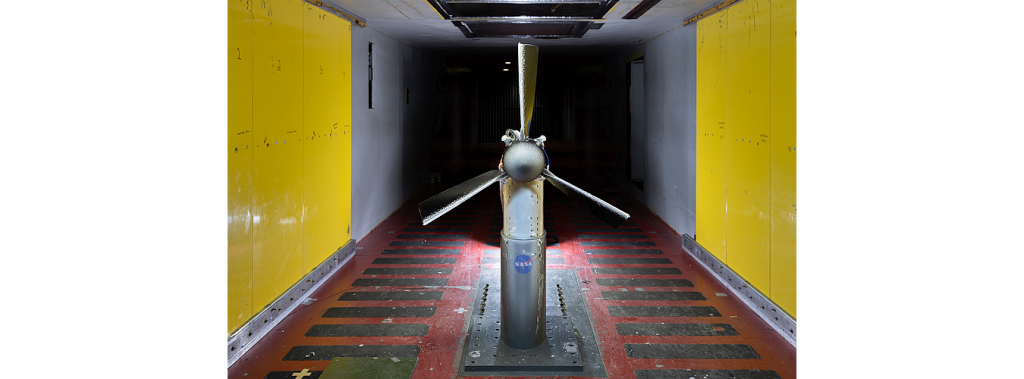
PRECISE will generate high-quality experimental data from icing wind tunnel tests at two complementary facilities: the NASA Glenn Icing Research Tunnel and the Rail Tec Arsenal icing wind tunnel. The project will investigate three different sizes of a non-proprietary three-bladed propeller geometry designed specifically for this research.
By comparing results across propeller sizes, operating conditions and facilities, the project will help develop and validate scaling methods for propeller icing. These results will also support updates to numerical tools used to predict ice accretion, shedding and related secondary effects on rotating blades.
| Project Duration | July 2025 – June 2028 |
| Research Focus | Propeller icing, scaling methods, experimental testing and numerical simulation |
| Facilities | RTA Icing Wind Tunnel and NASA Glenn Icing Research Tunnel |
| Propellers Studied | Small, medium and large three-bladed propeller configurations |
| Dissemination | Public website, LinkedIn updates, presentations, scientific publications and shareable visual material where available |
Follow the PRECISE journey
Over the course of the project, this website will share public updates, milestones, publications and selected visual material from the experimental campaigns.